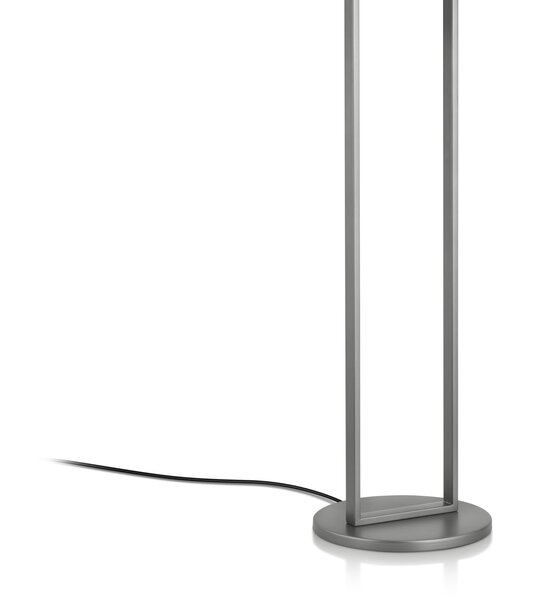
A home, shaped by light: The Knapstein luminaire
The day is drawing to a close. Outside, darkness descends over the city. Inside, in a cozy living room, a warm, comforting light unfolds. It casts a gentle brightness onto the antique mahogany shelf, highlights the kaleidoscopic colors of the handwoven rug, and throws soft shadows onto a well-read book, carefully placed on the coffee table. At the heart of this relaxing scene: a Knapstein luminaire, a masterpiece of German engineering and a commitment to perfect lighting design.
Advantages of this luminaire
- Precision: Knapstein luminaires allow precise light control to illuminate the room optimally.
- Ergonomic comfort: Their intuitive operating concept ensures stepless dimming and makes adjusting the light quality effortless.
- Durability: As a product of technically advanced German manufacturing expertise, Knapstein luminaires offer exceptional durability and resilience.
Technical features
- Material: Made in Germany with high-quality materials, every Knapstein luminaire guarantees durability and stability.
- Adjustability: Its dynamic light control makes it possible to regulate the brightness of the luminaire intuitively and adapt it to different room and usage scenarios.
- Lighting technology: Knapstein luminaires use state-of-the-art lighting technology to ensure even brightness distribution and outstanding light quality.
FAQ – Frequently asked questions
Why is the attention to detail of Knapstein luminaires particularly important for residential lighting?
Detailed light control is essential for creating an inviting room atmosphere. Knapstein luminaires make it possible to adjust the light precisely in order to highlight specific areas or gently dim them. It helps to consciously structure and design the room.
How does the functional design of Knapstein luminaires enhance interior design?
The functional design of Knapstein luminaires is minimal, timeless, and can be integrated seamlessly into various interior design styles. As a result, it blends fluidly into the living space and appears to be an integral part of it, rather than simply an added object.